
Last month I spent a week on an island 95 miles off Honduras, no air conditioning, no real showers, looking for animals nobody has seen in decades.
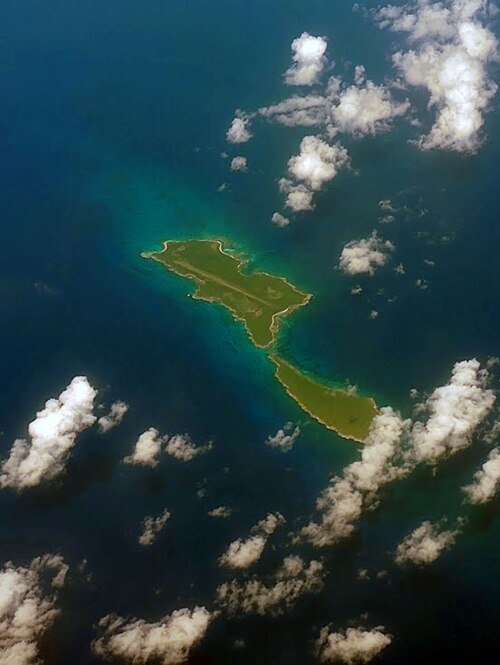
The Swan Islands sit out in the open Caribbean with almost nothing on them. A small Honduran naval garrison, and a handful of endemic species that exist there and nowhere else on the planet, many threatened or critically endangered. Endemic is a quiet word for a loud fact. If these animals vanish from the Swan Islands, they vanish from existence. There is no backup population on the mainland.
Based on plans that have already been floated, these islands could be turned into a prison colony or a resort within the next few years. Either one would likely wipe out what's left of these rare species. The danger to somewhere like that is bureaucratic. A development plan and a signature could finish what no hurricane has managed to.
I was accepted on a joint US-Honduras expedition to document what lives on the islands and to search for species that science may not even know about yet. The fieldwork we did that week became part of the conservation case for protecting them from development. The point was to build a record that would make destroying the place harder to justify.

Some of what we looked for hadn't been documented in decades. That's a strange thing to go searching for, because you don't know going in whether you're cataloging a survivor or confirming a loss. Either answer mattered. A sighting strengthens the case to protect the islands. An absence tells you how little time the rest of it has.
I rarely talk about this side of my life in a professional context. I've cared about wildlife conservation for years, and those who know me know that I always have a collection of interesting exotics at home. When the chance came to do real fieldwork on a remote island, it was a bucket list opportunity and I jumped on it.
Every leader I respect has something that pulls them completely out of their professional world. Something where the stakes have nothing to do with quarterly revenue or whether a deal closes by the end of the month. Something that maybe they're not yet good at, something where their title is irrelevant.
I think this matters more than we admit. If your entire identity lives inside your job title, one of two things happens. You burn out, because there's no version of you left standing when the work goes badly. Or you become boring, because you've stopped being curious about anything that won't show up in a performance review. Maybe both.
Part of the pull, for me, was being a beginner again. I wasn't the most capable person on that expedition, not by a long shot. I learned and took direction from people who spent their lives studying what I was only learning to see. Most leaders I know haven't been genuinely bad at something, in front of other people, in years. It does something to you. Not all of it comfortable, and yet refreshing and rewarding at the same time.
I've spent my career in rooms where the stakes are measured in dollars, or in how fast you can contain something that's already going wrong. I'm good in those rooms. But those rooms will take everything you give them and ask for more, and not one of them will ever tell you to go look at a lizard.
Out on the Swan Islands, none of that applied. The ocean didn't know I ran a company. The animals I was looking for had been there long before any of us, and they didn't care what was sitting in my inbox. There's something clarifying about that. You spend a few days somewhere none of your usual advantages count for anything, and you come back able to see your actual work more clearly than you could while standing inside it.
So if you don’t already have it, find your own version. Something with real stakes that has nothing to do with the thing you're known for, and not a hobby you keep around to sound well rounded at dinner.
I'm back at my day job now, reenergized, and ready to go.

Carraig Stanwyck is the CEO of 3 Tree Tech in Portland. Proven people leader and program architect with extremely diverse background and extensive track record of immediate success and constant improvement. When the opportunity came to lead 3 Tree Tech, he knew he’d found people who shared his belief that technology partnerships should be about more than transactions.
