


Insights
Here is our shared knowledge base and latest happenings concerning the industry, our partners and company.

3 Tree Tech Acquires Konnect.io
//
3 Tree Tech Acquires Konnect.io //
One approached it with people and process and the other confirmed the necessity for a better partner channel through a technology platform.
We are excited to announce the acquisition of Konnect.io !





Swan Islands Expedition
I've spent my career in rooms where the stakes are measured in dollars, or in how fast you can contain something that's already going wrong. I'm good in those rooms. But those rooms will take everything you give them and ask for more, and not one of them will ever tell you to go look at a lizard.
Out on the Swan Islands, none of that applied. The ocean didn't know I ran a company. The animals I was looking for had been there long before any of us, and they didn't care what was sitting in my inbox. There's something clarifying about that. You spend a few days somewhere none of your usual advantages count for anything, and you come back able to see your actual work more clearly than you could while standing inside it.

The Power of Influence for Security Leaders
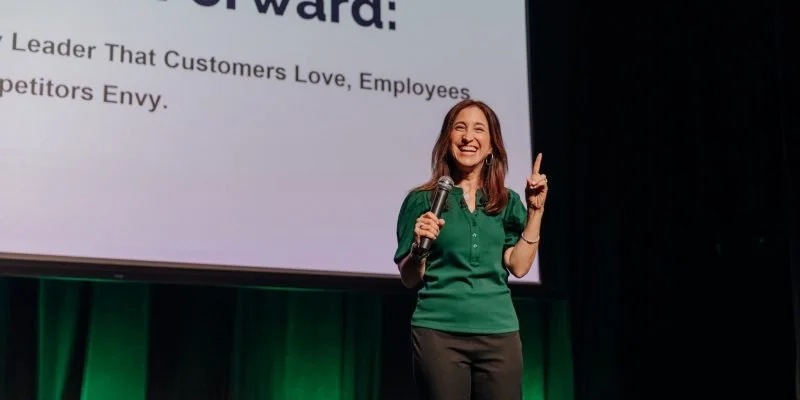
I was selected to speak at RSA Conference 2026 for the first time this year, and had the honor of sharing the stage with Deidre Diamond, CEO and Founder of CyberSN. Our session, "The Power of Influence for Security Leaders," started from a simple observation. Adversaries study influence every single day. Social engineers, nation-state operators, ransomware negotiators. They train this skill deliberately. Meanwhile, the people defending organizations are expected to just figure it out on the job. Research from Harvard Business Review, McKinsey, and the Center for Creative Leadership consistently places influence in the top three skills required for leadership effectiveness. Yet almost nobody in cybersecurity receives formal training in it.

The SKO of Superpowers and Megazords
Superpowers and Megazords
We also spent time talking about how we've built our team differently. In a traditional channel partner, you get a seller who has surface-level knowledge across a broad set of products paired with a sales engineer who actually knows the technology. The seller does the talking, the sales engineer does the explaining. We don't operate that way.
At 3 Tree Tech, our sellers are subject matter experts. Each person on the team has deep expertise in specific areas of IT and cybersecurity. But nobody can be an expert in everything, so instead of faking it, our team is incented to bring in the right teammate when they identify a customer need that falls outside their specialty. Team selling isn't a buzzword for us. It's baked into how we pay people.

Trust is our currency.
Carraig Stanwyck joined Lou Rabon on Channel Security Secrets to dig into what’s actually happening inside security programs. Teams chasing new products while ignoring what they already own. Procurement shaping outcomes more than the people running security. Organizations operating without a clear risk appetite. And the role transparency plays when you’re trying to build trust in an environment that isn’t always built for it.

Perception is Everything
Three Months as CEO and What I Got Wrong About Being a Good Customer
When I accepted the CEO role at 3 Tree Tech three months ago, I thought I understood the vendor side of technology partnerships. I’d been partnering with vendors for over a decade, and I'd been 3 Tree Tech’s customer for over five years. I'd seen how partnering was traditionally done, and then I saw how 3 Tree Tech operated differently. I felt I knew the pain points on both the customer and vendor sides.

A Letter to Anyone Wondering… Huh?
A friend in business retorted to me, “I’ve never known anyone to actively demote themselves and bring in their replacement while smiling.” Cyber security leaders think in terms of impact. They don’t ask “Is this cool?” — they ask “If this fails, what breaks for customers and the business?” That mindset promotes growth while reducing friction in business.